The short version: MediAsas is a basic medical insurance and takaful plan backed by the government, launching nationwide in January 2027. Entry premiums start from around RM65 a month and you can pay with your EPF Akaun Sejahtera. It is a real safety net for millions of uninsured Malaysians, but it is not a full medical card, and the fine print matters.
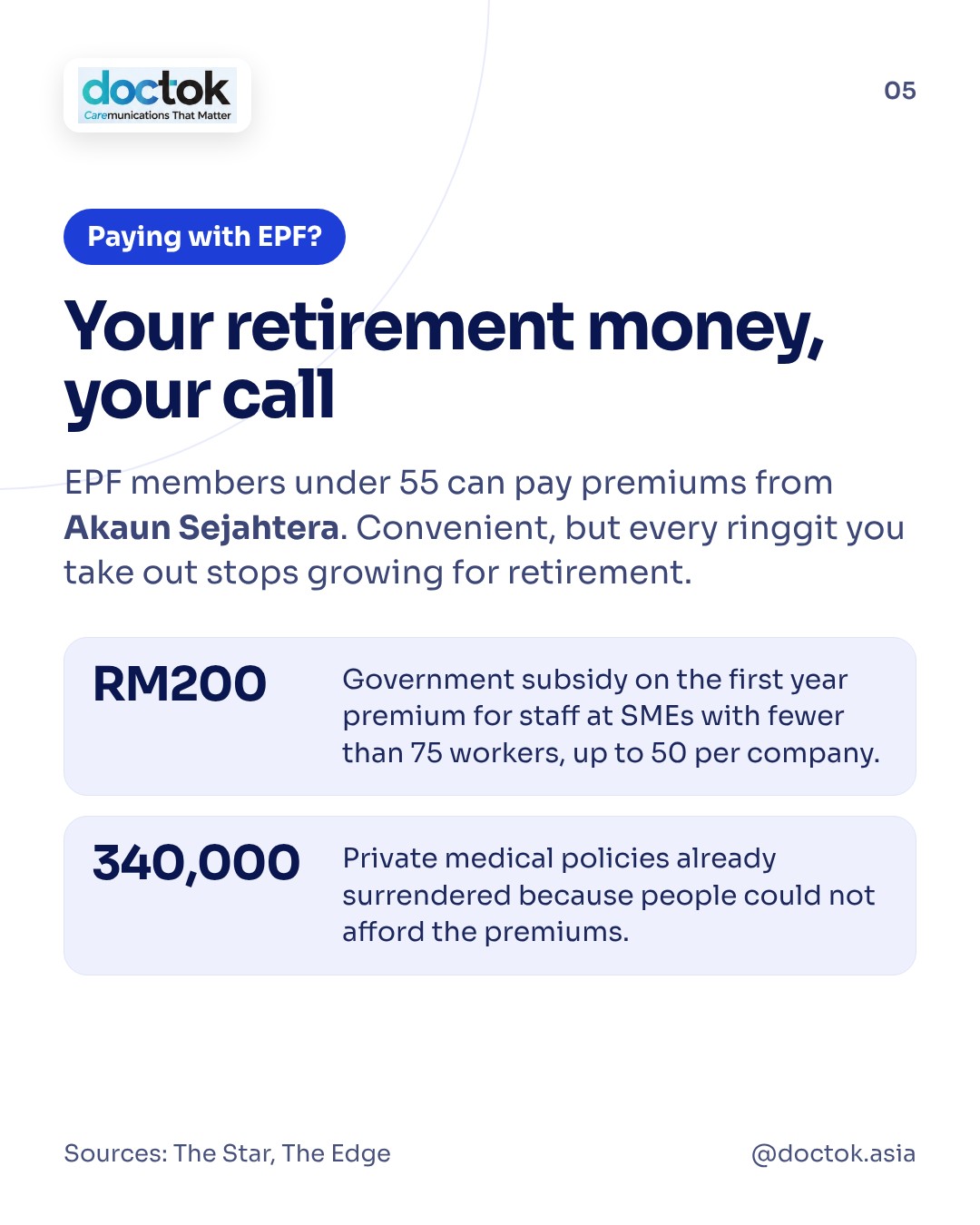
Medical costs in Malaysia rose 15% in 2024, well above the Asia Pacific average of 10%, according to Bank Negara. Premiums followed, and around 340,000 private medical policies have already been surrendered by people who could no longer afford them. MediAsas is the government's answer to that squeeze. Here is what it actually means for you.
What MediAsas is
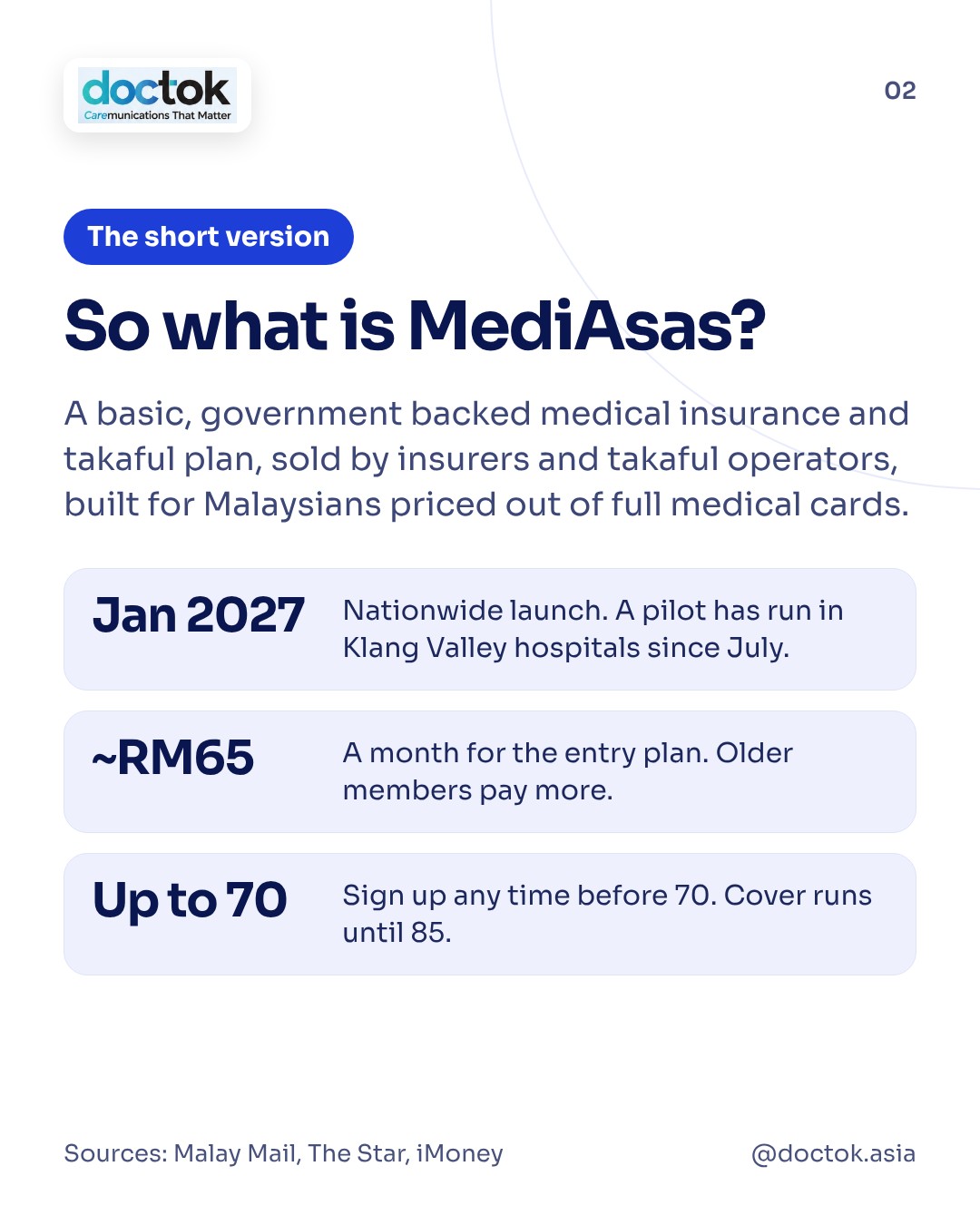
MediAsas is a standalone, standardised medical plan, designed with Bank Negara, the Health Ministry and the Finance Ministry under the RESET strategy and sold by insurance and takaful operators. It was previously known as the Base MHIT Plan, and a pilot has been running in Klang Valley hospitals since the end of July 2026.
It comes in two versions: MediAsas Teras, the standard plan, and MediAsas Fleksi, a higher tier. Insurers that sell comprehensive medical plans will have to offer MediAsas as their entry product, which means you can move between insurers or from an employer plan to your own without starting from zero.
How much it costs
- From around RM65 a month for the entry plan, with premiums rising with age. Reported ranges run from about RM60 to RM550 a month.
- Premiums are not guaranteed and can be revised over time.
- You can sign up any time before age 70, and cover runs until 85.
What you get
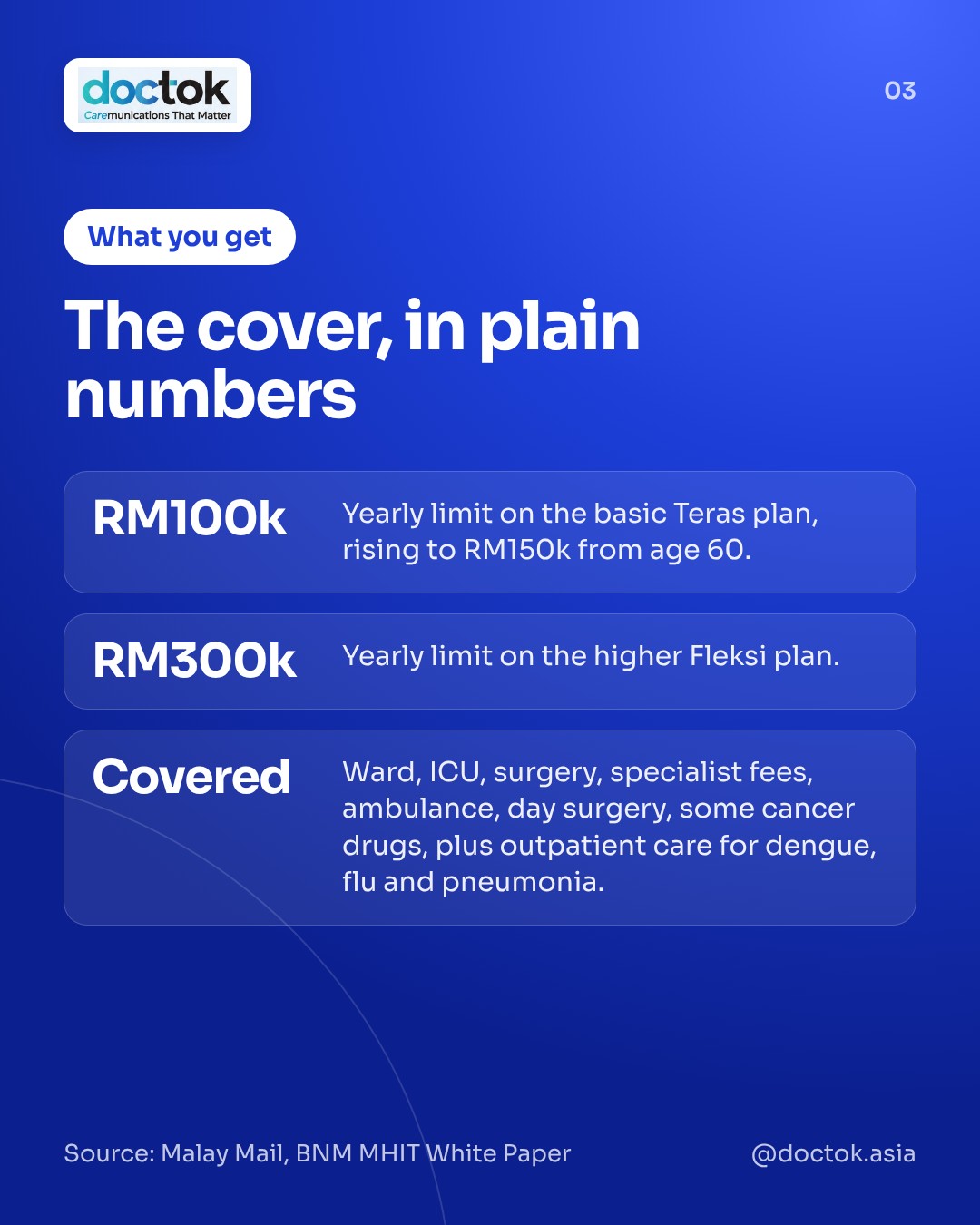
- RM100,000 a year on the Teras plan for those 59 and below, rising to RM150,000 from age 60.
- RM300,000 a year on the Fleksi plan.
- Hospital stays, ICU and operating theatre fees, surgeons, anaesthetists and specialist visits in hospital.
- Medicines and supplies, including selected high cost outpatient drugs for serious illnesses such as cancer.
- Ambulance and day surgery, plus acute outpatient care for dengue, influenza, bronchitis and pneumonia.
- Discounted health screenings and vaccinations.
For context, the average hospital admission in 2024 cost about RM9,300, so a RM100,000 yearly limit goes a long way for most single admissions. Hospital bills under MediAsas also follow standardised charges by diagnosis and treatment, which is meant to stop surprise bills.
The catch
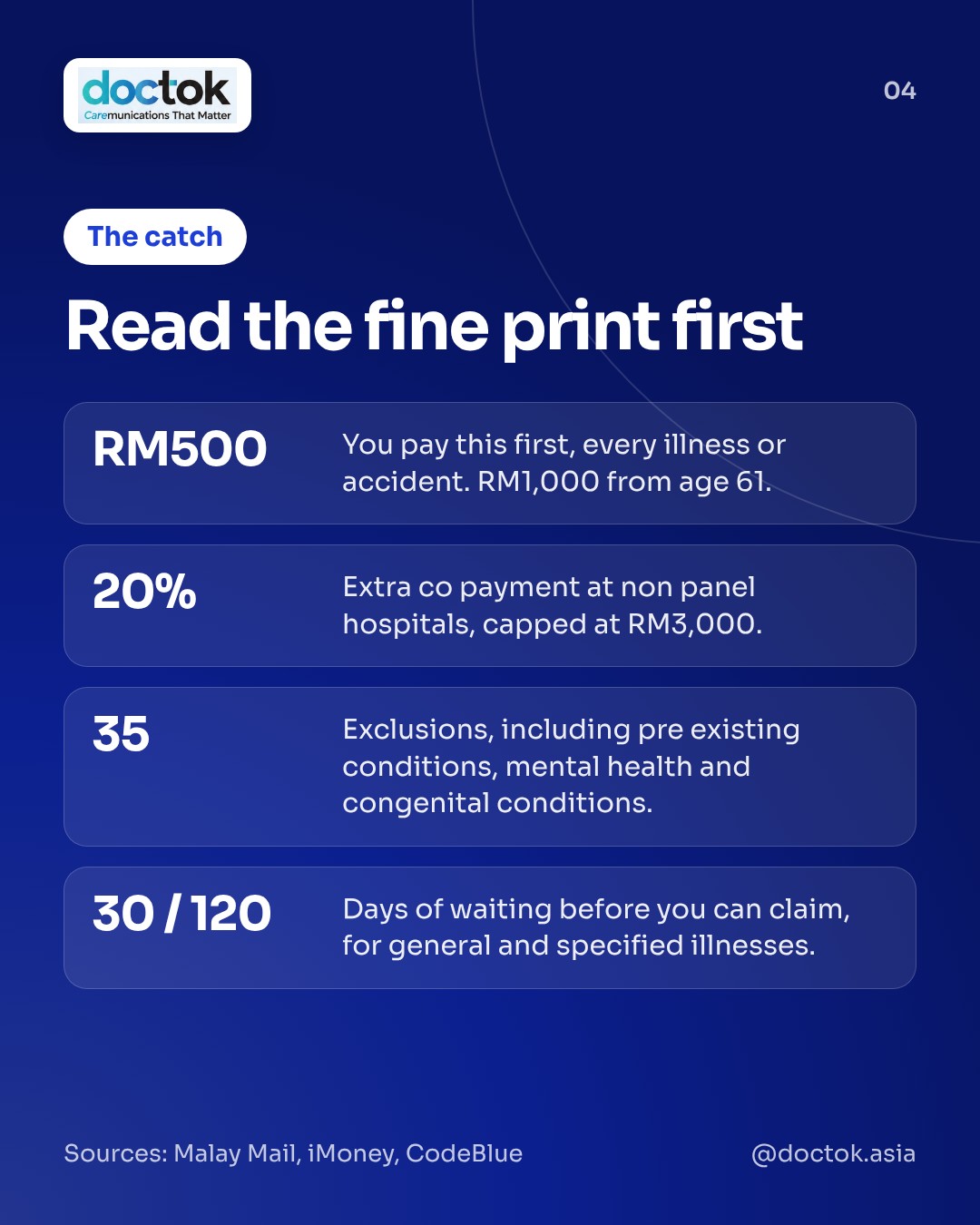
- You pay the first RM500 of every illness or accident (the deductible). From age 61 that rises to RM1,000.
- At non panel private hospitals you also pay 20% of the bill, capped at RM3,000. Panel hospitals have no co payment.
- There are 35 exclusions, including pre existing conditions, mental health treatment and congenital conditions.
- Waiting periods of 30 days for general conditions and 120 days for specified illnesses before you can claim.
- It is fully underwritten, so insurers can still assess you if you declare existing conditions.
There is some good news in the small print too. After seven years of continuous cover, claims generally cannot be rejected because of an innocent mistake on your application form. Deliberate or fraudulent non disclosure still can be.
Paying with your EPF
EPF members under 55 can pay MediAsas premiums from Akaun Sejahtera. That makes it easy to start, especially if cash is tight, but every ringgit taken out stops compounding for your retirement. If you can pay from your monthly income instead, it is worth thinking about.
If you work at a small business, there is extra help: the government will pay RM200 of each employee's first year premium at SMEs with fewer than 75 staff, for up to 50 employees per company.
What the critics say
Not everyone is convinced. Health economist Prof Syed Aljunid has argued the scheme should be scrapped, and CodeBlue and at least one MP have questioned whether the limits match real treatment costs and whether drawing on EPF is the right trade off. Others point out that the subsidies flow to private insurers and takaful operators.
The DocTok take
MediAsas will not replace a full medical card, and it was never meant to. What it does is give the uninsured middle, gig workers and SME staff a standard, affordable floor of hospital cover, with rules that are the same no matter which insurer you buy from.
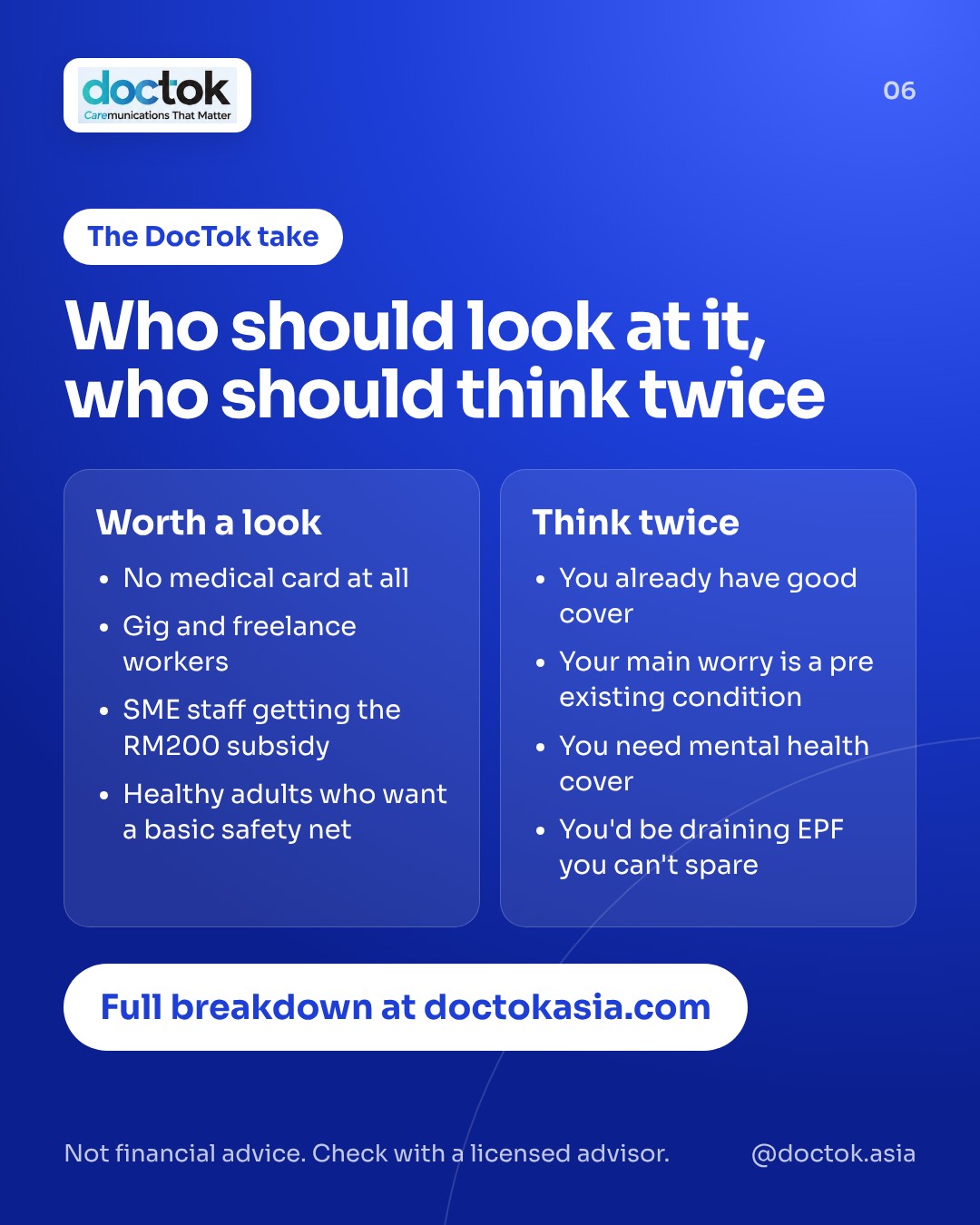
- Worth a look if you have no medical cover at all, work freelance or in the gig economy, work at an SME that will get the RM200 subsidy, or are healthy and want a basic safety net.
- Think twice if you already have good cover, if your main worry is an existing condition, if you need mental health cover, or if you would be draining EPF savings you cannot spare.
Before you sign up, compare the plan with any cover you already have through work, and speak to a licensed insurance or takaful advisor about your situation.
This article is for general awareness and is not financial advice. Details are based on reporting by Malay Mail, The Star, The Edge, iMoney and CodeBlue between August and October 2026, and on Bank Negara Malaysia's MHIT White Paper. Final terms may change at launch.